
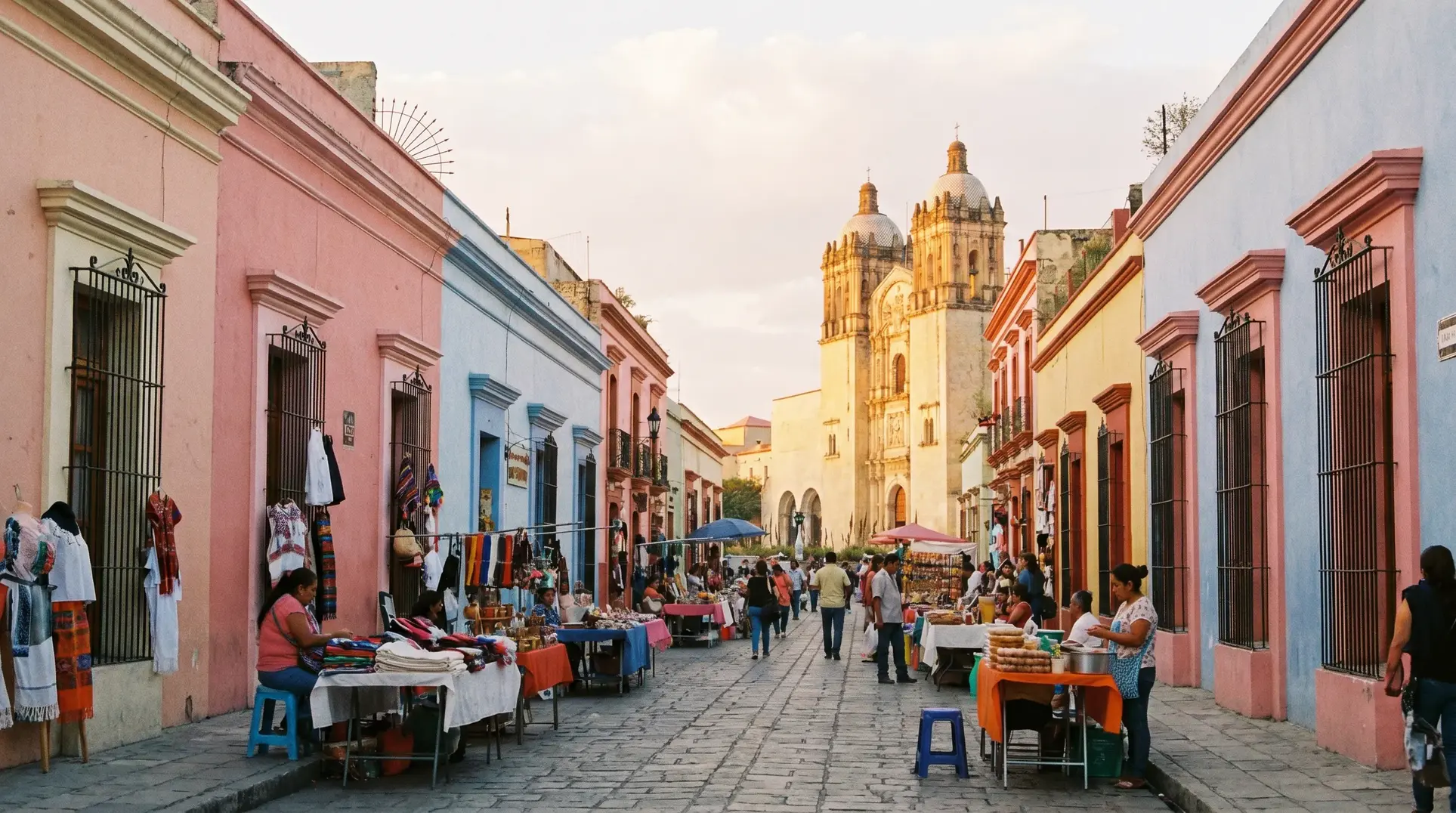
Oaxaca is one of those places that gets under your skin and never really leaves. We say that as people who’ve spent years welcoming travelers to Mexico, watching their faces light up when they bite into their first real tlayuda or catch sight of Santo Domingo’s gold-covered interior for the first time. This isn’t just another Mexican colonial city — it’s a UNESCO-listed historic center of Oaxaca & Monte Albán, the undisputed food and mezcal capital of the country, and the living heart of Zapotec and Mixtec Indigenous culture. Pastel-painted buildings line cobblestone streets, street art splashes color onto ancient walls, and the smell of chocolate and mole drifts from market stalls. Whether you’re a digital nomad settling in for a few months, a backpacker passing through, or a traveler hungry for authentic experiences, this guide covers everything worth doing in Oaxaca City and the stunning valley around it.
Exploring Oaxaca City’s Historic Center
The compact historic center is where you’ll spend most of your time, and honestly, it never gets old. Every morning walk reveals a new courtyard, a hidden mezcalería, or a street vendor making fresh memelas. The city is incredibly walkable, which is one of the things we love most about living and working here.
Santo Domingo de Guzmán
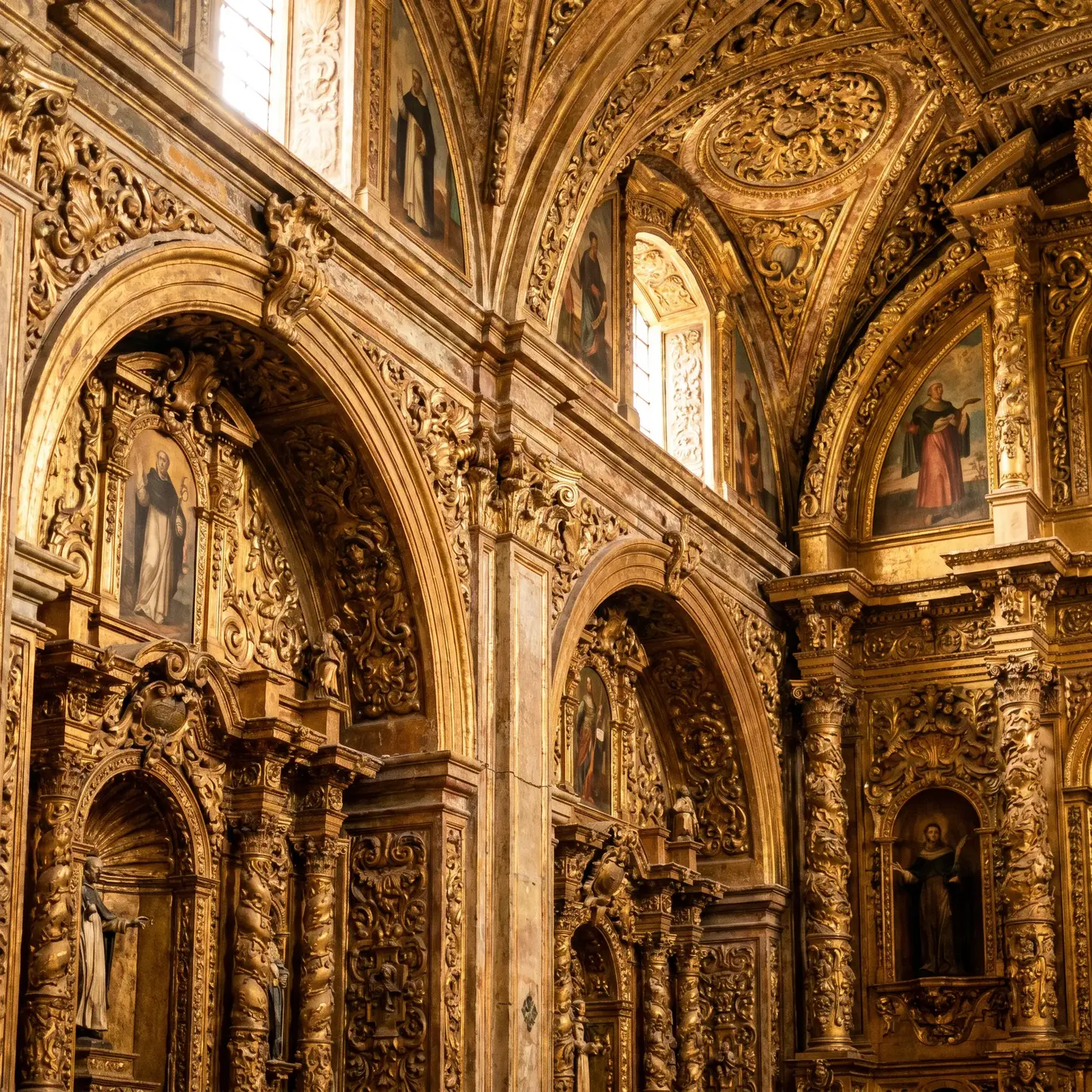
Start at the Templo de Santo Domingo de Guzmán, and prepare to have your jaw drop. This 16th-century church is covered — and we mean covered — in ornate gold leaf baroque decoration. The interior practically glows. It’s free to enter and sits at the top of Andador Macedonio Alcalá, the main pedestrian street. Right next door, the Museum of Oaxacan Cultures houses artifacts from Monte Albán and other archaeological sites, giving you context before you visit the ruins themselves.
The Ethnobotanical Garden
Behind Santo Domingo, the Ethnobotanical Garden showcases plants native to Oaxaca in a beautifully designed space. Tours are required (they run in Spanish and English), but they’re worth it for understanding how deeply plants are woven into local culture — from dyes used in traditional textiles to ingredients in mole and mezcal.
The Zócalo and Andador Macedonio Alcalá
The Zócalo is the city’s central plaza, shaded by massive trees and surrounded by cafés with perfect people-watching seats. Grab a coffee, watch the balloon vendors, listen to marimba players, and soak in the rhythm of daily life. From here, walk up Andador Macedonio Alcalá, where you’ll find:
- Art galleries and artisan shops
- Street performers and musicians
- Some of the city’s best mezcalerías
- Beautiful colonial architecture at every turn
Street Art and Mezcalerías
Oaxaca’s street art scene is thriving. Murals celebrating Indigenous culture, political messages, and pure artistic expression cover walls throughout the center and especially in neighborhoods like Jalatlaco. After dark, the mezcalería scene comes alive. Unlike tequila bars elsewhere in Mexico, these spots treat mezcal with reverence — expect knowledgeable bartenders, small-batch bottles, and smoky sips that reveal why this spirit is having a global moment.
Markets: The Soul of Oaxacan Life
If you want to understand Oaxaca, spend time in the markets. These aren’t tourist attractions with a few locals thrown in — they’re the real deal, where families have sold the same products from the same stalls for generations.
Mercado 20 de Noviembre
This is the food market, and it’s legendary. Head straight to the “pasillo de humo” (smoke aisle) where vendors grill tasajo (dried beef), chorizo, and cecina over open coals. Point to what you want, grab a seat at the communal tables, and they’ll bring it with fresh tortillas, salsas, and tlayudas. It’s loud, smoky, delicious, and one of the best meals you’ll have in Mexico.
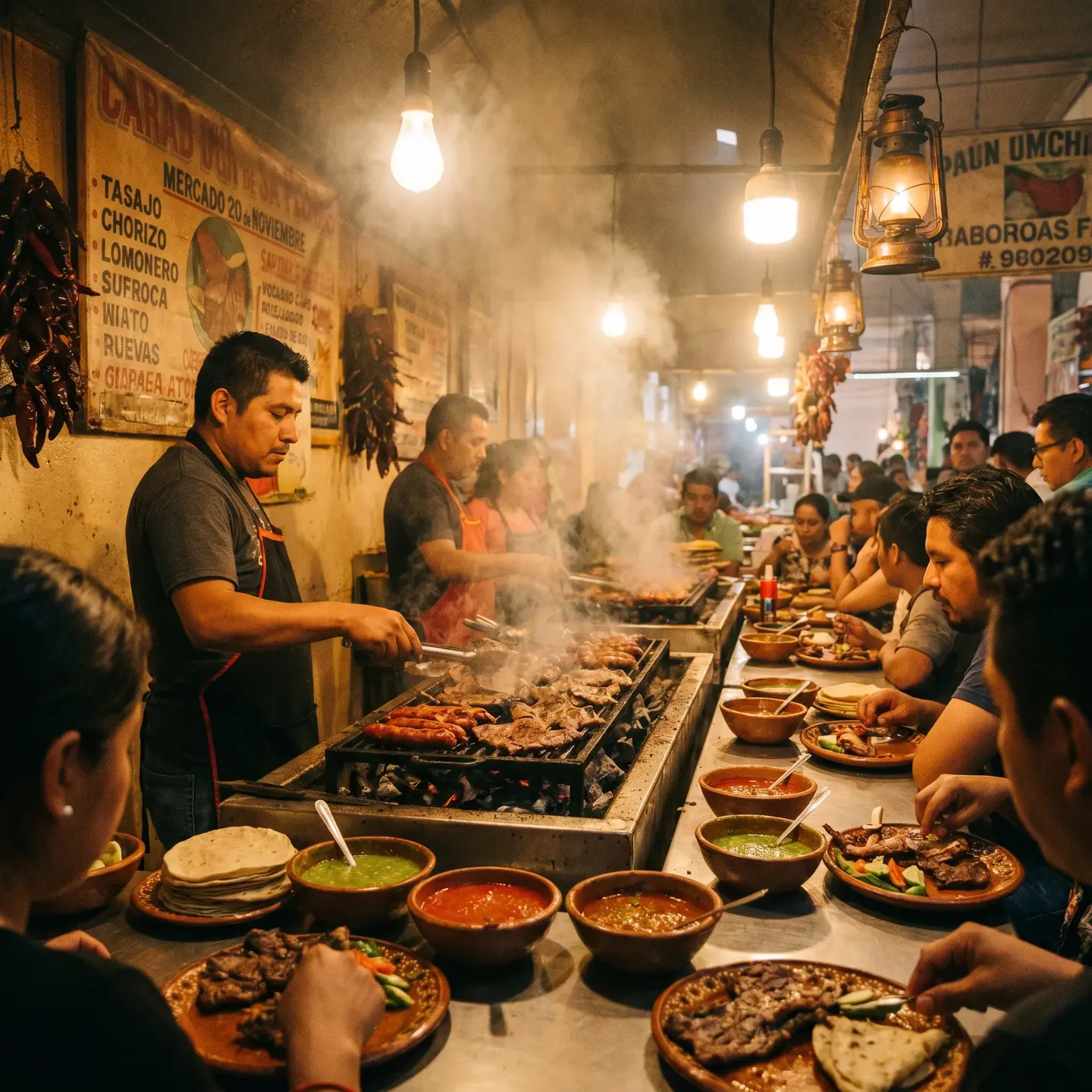
Mercado Benito Juárez
Just steps away, Mercado Benito Juárez is where locals shop for fresh produce, spices, mole pastes, chapulines (grasshoppers — yes, you should try them), chocolate, cheese, and crafts. It’s a great place to pick up souvenirs that actually mean something: black pottery from San Bartolo Coyotepec, embroidered blouses, or bags of Oaxacan coffee.
Sunday Market at Tlacolula
If you’re here on a Sunday, the market at Tlacolula (about 30 minutes outside the city) is not to be missed. It’s one of the largest and oldest markets in Mesoamerica, with roots going back to pre-Hispanic times. You’ll hear Zapotec languages spoken, see produce and crafts you won’t find anywhere else, and experience a side of Oaxaca that feels unchanged by time.
Food and Mezcal: Why People Really Come to Oaxaca
Let’s be honest — food is probably the main reason Oaxaca is on your list, and it should be. This is the culinary heart of Mexico, and the flavors here are unlike anywhere else in the country.
The Seven Moles
Oaxaca is famous for its seven traditional moles, each with dozens of ingredients ground and cooked into complex sauces:
- Negro — the most famous, deep and chocolatey
- Rojo — rich with dried chiles
- Coloradito — slightly sweet with ancho chiles
- Amarillo — tangy and lighter
- Verde — fresh with herbs and pepitas
- Chichilo — smoky and intense
- Manchamanteles — sweet with fruit
You’ll find mole everywhere, from market stalls to fine dining restaurants. Order it over chicken with rice, or ask for enmoladas (enchiladas in mole sauce).
Tlayudas and Chapulines
Tlayudas are Oaxaca’s answer to pizza — large, crispy tortillas spread with black bean paste, asiento (unrefined pork fat), Oaxacan cheese, and toppings like tasajo or chorizo. They’re folded in half and grilled until the cheese melts. Chapulines — toasted grasshoppers seasoned with lime and chile — are the city’s signature snack. They’re crunchy, tangy, and surprisingly addictive once you get past the initial mental hurdle.
Mezcal and the Palenques
Santiago Matatlán, about 45 minutes from the city, is the self-proclaimed “world capital of mezcal.” Small family-run palenques (distilleries) offer tours where you can watch the entire process: roasting agave in underground pits, crushing it with horse-drawn mills, fermenting in wooden vats, and distilling in copper or clay stills. Tastings are generous and educational. Just pace yourself — mezcal is stronger than it seems.
Day Trips: The Valley of Oaxaca
Some of the most spectacular things to do near Oaxaca require leaving the city. The surrounding valley is dotted with ancient ruins, artisan villages, and natural wonders that are easy to visit on day trips.
Monte Albán
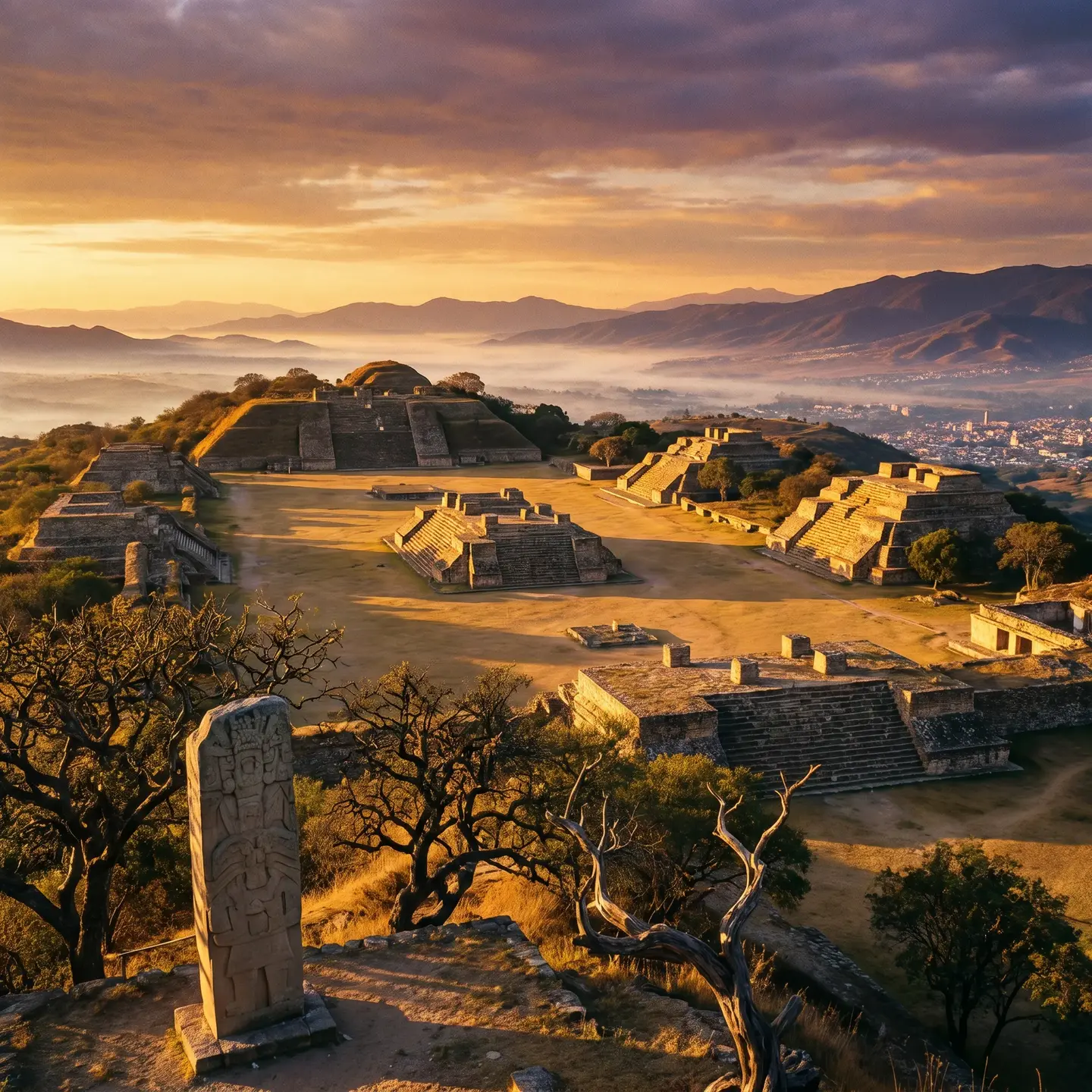
Only about 20 minutes (5 miles) from the city center, Monte Albán was the ancient capital of the Zapotec civilization and one of the most important archaeological sites in Mesoamerica. The main plaza sits on a flattened mountaintop with panoramic views of the valley below. You’ll see:
- Ancient pyramids and temples
- The mysterious “Danzantes” stone carvings
- A ball court and tombs
- A small on-site museum
Go early in the morning to beat the heat and crowds. Budget at least two to three hours to explore properly.
Hierve el Agua
About 40 miles from the city, Hierve el Agua is one of only two “petrified waterfalls” in the world (the other is in Turkey). Mineral-rich spring water has cascaded over cliffs for thousands of years, leaving behind rock formations that look exactly like frozen waterfalls. There are two natural infinity pools where you can swim while looking out over the valley — one of the most surreal experiences you’ll have in Mexico. A quick note: despite the name (“boiling water”), the springs are cool and refreshing, not hot.
The Valley Circuit
Many travelers combine several valley attractions into one big day trip. A common circuit includes:
- El Tule — home to a 2,000-year-old Montezuma cypress tree with the widest trunk of any tree in the world
- Teotitlán del Valle — a Zapotec village famous for handwoven wool rugs made with natural dyes
- Mitla — Zapotec ruins known for intricate geometric stone mosaics
- Hierve el Agua — the perfect swimming finale
You can do this circuit by colectivo (shared van) if you’re adventurous and on a tight budget, or join a group tour which typically runs between 400-700 MXN and handles all the logistics.
Where to Stay: The Best Neighborhoods
Oaxaca City is compact enough that staying in the center puts everything within walking distance. Here’s what we’ve learned about the best areas:
Centro Histórico
The historic center is where most travelers stay, and for good reason. You’re steps from the markets, Santo Domingo, the Zócalo, and dozens of restaurants and mezcalerías. It’s also where you’ll find Leveli Coliving in Oaxaca, our base in the city. The streets are lively during the day and atmospheric at night. If you’re working remotely, being in Centro means you can pop out for a tlayuda lunch and be back at your laptop in fifteen minutes.
Jalatlaco
Just east of Centro, Jalatlaco is a quieter, more bohemian neighborhood with colorful streets, local cafés, and a slower pace. It’s slightly removed from the tourist bustle but still an easy walk to everything. Artists and long-term expats tend to gravitate here.
Xochimilco
North of the center, Xochimilco is residential and peaceful, with good coffee shops and a neighborhood feel. It’s ideal if you want to feel more like a local than a visitor, especially for longer stays.
Festivals Worth Planning Around
Oaxaca’s festival calendar is packed, but two events stand out as worth timing your trip for:
Day of the Dead (Late October – Early November)
Oaxaca is one of the best places in Mexico to experience Día de los Muertos. Cemeteries come alive with families decorating graves, altars (ofrendas) fill homes and public spaces, and comparsa parades wind through the streets with music, dancing, and elaborate costumes. It’s deeply spiritual and joyfully celebratory at the same time.
Guelaguetza (July)
This annual Indigenous festival brings together dance groups from across Oaxaca’s eight regions, each performing traditional dances in colorful regalia. The main events happen at the Cerro del Fortín amphitheater, but the whole city celebrates with music, food, and parades throughout July.
Practical Tips for Getting Around
One of the best things about Oaxaca City is that you don’t need a car. The historic center is completely walkable, and everything mentioned in this guide is either on foot or reachable by taxi, colectivo, or tour.
Getting to Day Trip Destinations
- Monte Albán — Shared shuttles leave regularly from the center and cost very little; the ride takes about 20 minutes
- Valley circuit (El Tule, Teotitlán, Mitla, Hierve el Agua) — Join a group tour for convenience, or take colectivos if you’re comfortable navigating on your own
- Tlacolula Sunday market — Colectivos run frequently; it’s about 30 minutes each way
Safety
Oaxaca City is generally very safe for travelers. Use common sense — watch your belongings in crowded markets, don’t flash expensive electronics, and stick to well-lit streets at night. We’ve felt comfortable here for years, and the vast majority of visitors have nothing but positive experiences.
Making Oaxaca Your Base
For digital nomads and longer-stay travelers, Oaxaca offers something special: the chance to really settle into a place without the frantic pace of larger Mexican cities. The cost of living is reasonable, the food is incredible, the culture runs deep, and the community of remote workers and travelers is welcoming without being overwhelming.
At Leveli, we’ve designed our space with exactly this kind of traveler in mind. Our private rooms y shared dorms give you options whether you’re on a tight budget or want your own space. We’re in Centro, which means the markets, mezcalerías, and everything in this guide is right outside our door. High-speed wifi keeps you connected for work, and the community that naturally forms here means you won’t be exploring alone unless you want to be.
Oaxaca rewards the traveler who stays a little longer, who wanders without a strict itinerary, who says yes to the mezcal tasting and the Sunday market trip and the late-night tlayuda run. We hope this guide gives you a starting point, but the best experiences here are the ones you’ll stumble into yourself. Check out Oaxaca’s official tourism site for event calendars and updated visitor information, then come see for yourself why this city captures so many hearts.
Frequently Asked Questions
How many days do we really need in Oaxaca City to enjoy everything without feeling rushed?
If you want to truly sink into Oaxaca rather than just tick off a checklist, we’d suggest at least 4–5 days in the city, plus a couple of days for valley day trips. That gives you time to wander the historic center, eat your way through the markets, visit Santo Domingo and the Ethnobotanical Garden, and still fit in Monte Albán or Hierve el Agua without feeling like you’re constantly racing from one thing to the next.
Is Oaxaca a good base for digital nomads who need to work while exploring?
Yes, Oaxaca works surprisingly well as a slow-travel base when you’ve got a laptop to take care of. The historic center is walkable, so you can sneak out for a tlayuda or market lunch and be back at work in minutes. Cost of living is reasonable, café culture is growing, and at Leveli in Centro we’ve leaned into this lifestyle with high-speed wifi, flexible room options, and a built-in community of remote workers and travelers.
I’m overwhelmed by all the food options. Where should we start if it’s our first time in Oaxaca?
We’ve all had that “where do I even begin?” moment here. To keep it simple, start at Mercado 20 de Noviembre’s smoky aisle for grilled meats and tlayudas, then wander next door to Mercado Benito Juárez for mole pastes, chocolate, and chapulines. In the evenings, look for spots serving the seven traditional moles and pair your meal with a small mezcal tasting. Think of your first days as a delicious orientation rather than trying to eat everything at once.
Are Oaxaca’s day trips like Monte Albán and Hierve el Agua doable if we don’t speak Spanish or know the transport system?
Totally. If you’re comfortable figuring things out, colectivos and shuttles are cheap and straightforward for places like Monte Albán and Tlacolula. If that sounds stressful, group tours are an easy, low-friction option for the valley circuit (El Tule, Teotitlán, Mitla, Hierve el Agua) and usually cost 400–700 MXN, with transport and logistics handled. We often suggest starting with a tour your first time, then using what you learn to explore more independently.
How safe does Oaxaca feel day-to-day, especially around the historic center at night?
Living and working here, we’ve found Oaxaca City generally feels safe and relaxed, even after dark in Centro. The usual travel sense still applies: keep an eye on your bag in busy markets, avoid flashing pricey gear, and stick to well-lit, populated streets at night. Most visitors report only positive experiences, and the atmosphere around the Zócalo, Santo Domingo, and Andador Macedonio Alcalá is more about evening strolls and music than any kind of stress or tension.