

If you’ve searched for a “Mexico digital nomad visa,” you’ve probably noticed something confusing: dozens of articles promise to explain this visa, yet the information varies wildly. Here’s the truth that will save you hours of research — Mexico does not actually have an official digital nomad visa. Unlike countries such as Portugal or Costa Rica that have created specific visa categories for remote workers, Mexico uses an existing pathway that works brilliantly for nomads: the Temporary Resident Visa through the economic solvency route. We’ve hosted hundreds of remote workers at our coliving spaces in Guadalajara and Oaxaca, and this is the visa most long-stay guests use to live and work legally in Mexico. In this guide, we’ll walk you through everything you need to know — requirements, income thresholds, application steps, tax considerations, and what life actually looks like once you’ve sorted your paperwork.
Does Mexico Have a Digital Nomad Visa?
Let’s clear this up right away: no, Mexico does not offer a visa officially labeled “digital nomad visa.” What Mexico does offer is the Temporary Resident Visa (Residente Temporal), which remote workers have been using successfully for years to establish legal, long-term residence while working for foreign employers or clients.
This distinction matters because:
- You won’t find a “digital nomad” option when you visit a Mexican consulate
- The application process follows traditional residence visa requirements
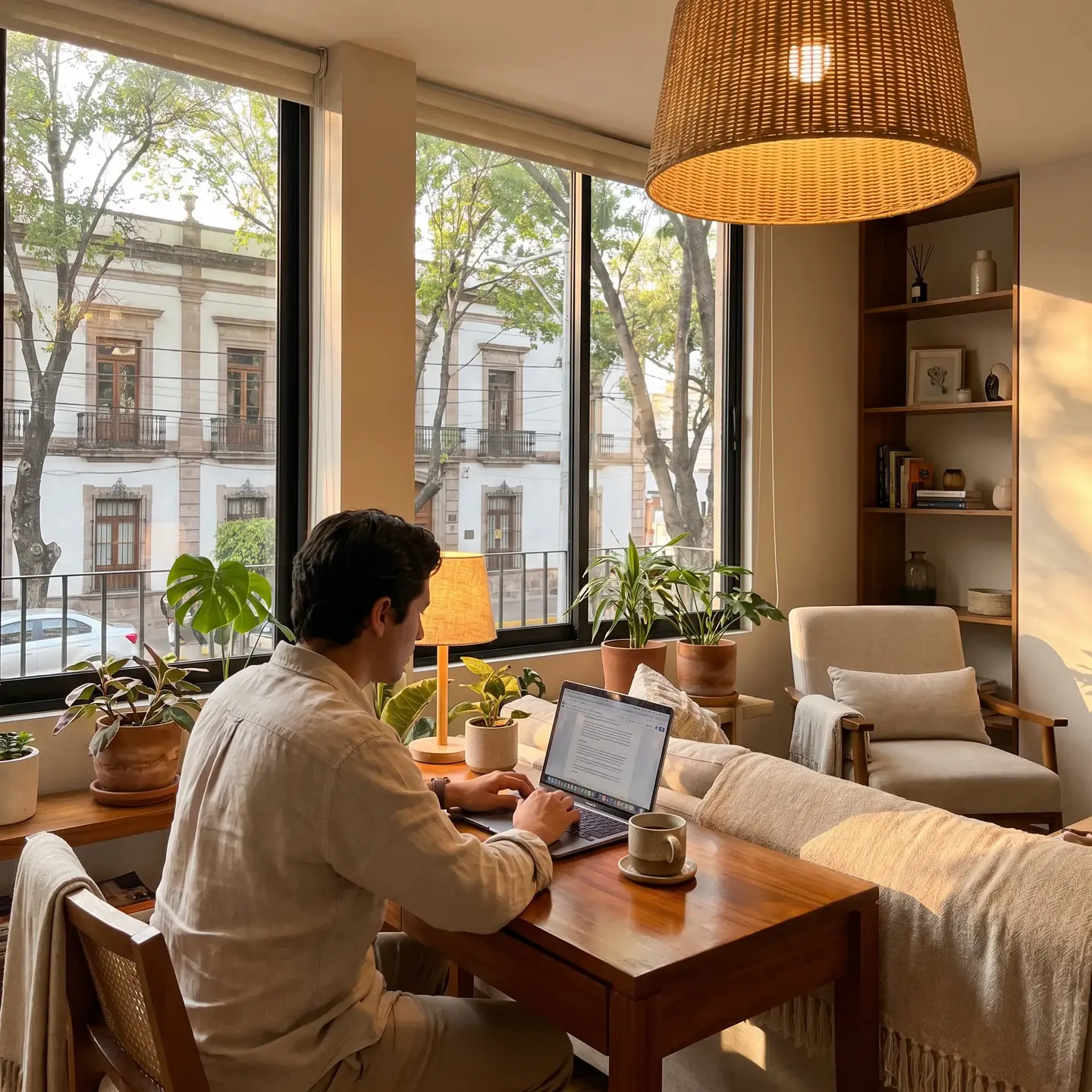
- The visa permits remote work for foreign employers and clients only — not local Mexican employment
The good news? The Temporary Resident Visa is actually quite nomad-friendly once you understand how it works. It’s valid for one to four years, renewable, and can eventually lead to permanent residency after four years or citizenship after five. For remote workers planning an extended stay in Mexico, this is the established, legitimate pathway — and it’s the one we recommend to guests planning to stay with us for months at a time.
Temporary Resident Visa Requirements for Remote Workers
The economic solvency route is designed for people who can support themselves financially without needing to work locally in Mexico. As a remote worker earning from abroad, you fit this category perfectly. Here’s what you’ll need:
Documentation Checklist
- Valid passport with at least six months remaining validity
- Completed visa application form (available from your nearest Mexican consulate)
- Passport-sized photographs meeting specific technical requirements
- Proof of economic solvency (bank statements, pay stubs, or investment accounts — more on this below)
- Proof of legal residence in the country where you’re applying, if you’re not a citizen there
- Application fee of approximately $51 USD
Some consulates also request:
- Proof of medical insurance
- Criminal background check
- Travel itinerary or proof of accommodation in Mexico
Requirements can vary slightly between consulates, so we always tell our guests to verify the exact documentation list with the specific consulate where they plan to apply. This isn’t bureaucratic hedging — we’ve genuinely seen differences between, say, the Los Angeles and London consulates.
Income and Savings Thresholds for 2026
This is where things get specific — and where you’ll want to pay close attention. Mexico calculates its financial thresholds using the UMA (Unidad de Medida y Actualización), which is adjusted annually. For 2026, the UMA is set at MXN 117.31 per day.
Based on current calculations, you’ll typically need to demonstrate one of the following:
Monthly Income Route
- Approximately $2,600 to $4,300 USD per month in verifiable income over the past 6-12 months
- Income must come from sources outside Mexico (salary, freelance contracts, business revenue)
- Bank statements showing consistent deposits are the standard proof
Savings/Investment Route
- Approximately $73,000 to $74,000 USD in savings or investments maintained over the past 12 months
- Account statements showing average balances are typically required
If You’re Bringing Dependents
Each dependent (spouse, child) typically adds around $860 USD per month to your income threshold.
Important caveats:
- These figures are typical ranges, not guarantees — consulates have some discretion
- Exchange rates affect the exact numbers at any given time
- Some consulates interpret the requirements more strictly than others
- Always verify current thresholds directly with your consulate before applying
We’ve seen guests successfully apply with income at the lower end of these ranges, and we’ve also seen consulates request additional documentation from applicants who seemed well-qualified. The key is preparing thorough, clear financial documentation and being ready to demonstrate stability rather than just hitting a minimum number.
How to Apply: The Two-Step Process
Unlike some visas where you can sort everything out after arrival, the Temporary Resident Visa requires you to start the process outside of Mexico. Here’s how it works:

Step 1: Apply at a Mexican Consulate Abroad
- Schedule an appointment through your nearest Mexican consulate’s booking system (often called MiConsulado)
- Gather your documentation according to that specific consulate’s requirements
- Attend your in-person interview with all original documents
- Pay the application fee (approximately $51 USD)
- Receive your visa sticker in your passport if approved — typically within 10 business days, though some consulates issue same-day
Step 2: Complete the Exchange (Canje) at INM in Mexico
This is the step many people don’t realize exists. Your visa sticker from the consulate is essentially an entry permit — you still need to exchange it for your actual Temporary Resident Card.
- Enter Mexico within your visa’s validity period
- Within 30 days of arrival, visit Mexico’s National Immigration Institute (INM) to complete the canje process
- Submit additional forms, photographs, and fees
- Provide proof of address in Mexico (a hotel reservation or coliving booking can work for this initial step)
- Receive your Temporary Resident Card — processing typically takes a couple of weeks
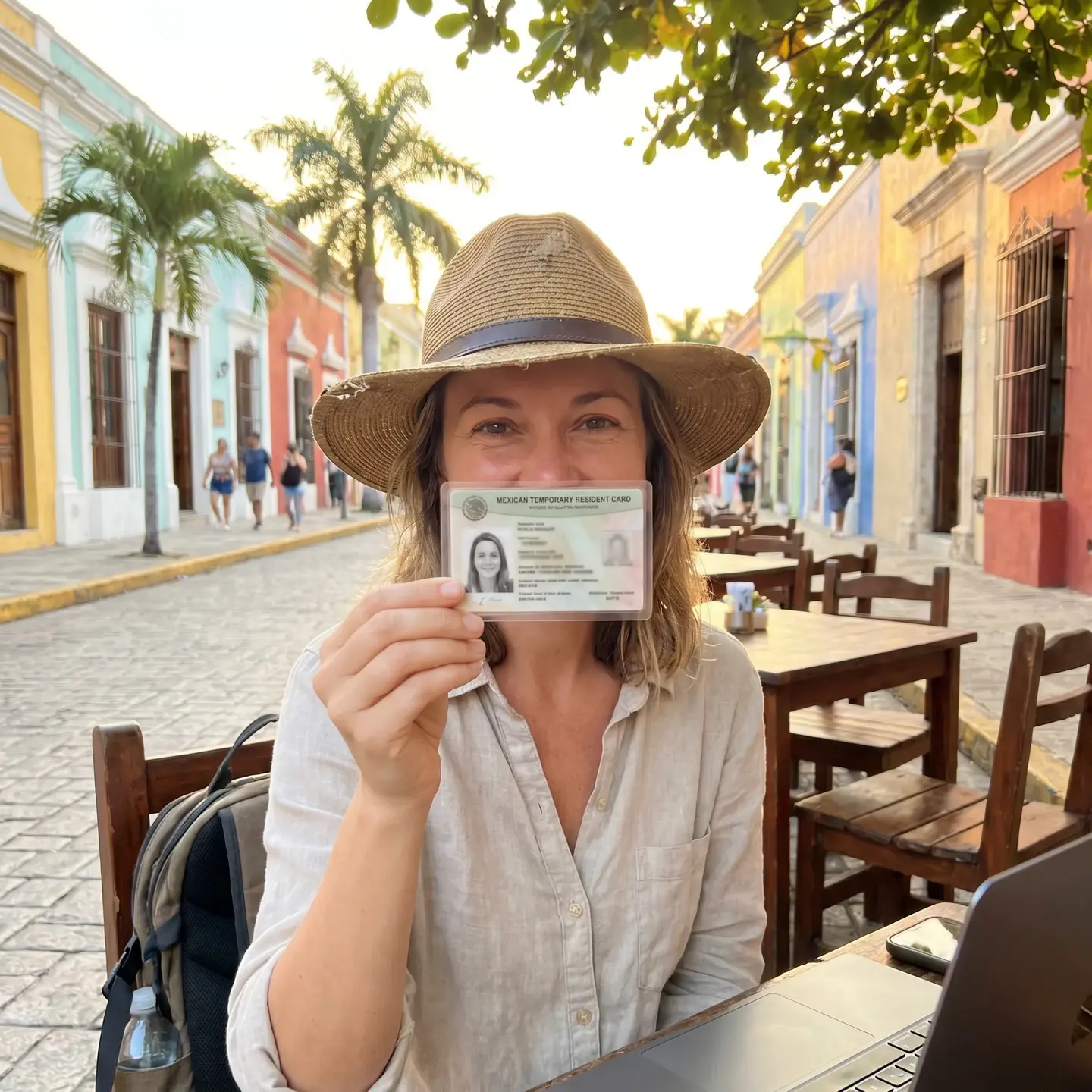
This card is your actual proof of legal residence. Keep it safe — you’ll need it for everything from opening a bank account to re-entering the country after international trips.
Timeline Expectations
From start to finish, plan for approximately 2-3 months:
- Consulate appointments can have wait times of 2-6 weeks depending on location and season
- Processing at the consulate: 1-10 business days
- INM card processing in Mexico: 2-4 weeks typically
If you’re planning a move to Mexico, we’d suggest starting this process at least three months before your intended arrival date.
What About Tourist Status?
Many remote workers initially enter Mexico as tourists, using the FMM (Forma Migratoria Múltiple) that allows stays of up to 180 days. It’s tempting to think this is sufficient for remote work — your money comes from abroad, you’re not competing for local jobs, so what’s the issue?
Here’s the reality: tourist status technically prohibits all work activity, including remote work for foreign companies. While enforcement has historically been inconsistent, we’ve noticed immigration officers becoming more discerning about entry stamps and questioning travelers who seem to be making repeated long stays.
For short visits or while you’re deciding whether Mexico is right for you long-term, tourist status is fine. But if you’re planning to base yourself here for months or years, the Temporary Resident Visa provides:
- Clear legal standing
- Easier re-entry after international travel
- Access to services that require proof of residence
- Peace of mind that you’re doing things properly
Many of our long-stay guests at Leveli arrive on tourist status for an initial visit, fall in love with Guadalajara or Oaxaca, and then fly home specifically to apply for the Temporary Resident Visa before returning for an extended stay.
Tax Considerations for Remote Workers in Mexico
Disclaimer: This is general information, not tax advice. Please consult a qualified tax professional for your specific situation.
Mexican tax law contains an important threshold that every remote worker should understand: the 183-day rule. Generally speaking:
- Under 183 days per calendar year: You’re typically only taxed on Mexican-sourced income (which, as a remote worker for foreign clients, you probably don’t have)
- Over 183 days per calendar year: You may be considered a Mexican tax resident and potentially liable for tax on worldwide income
Additionally, Mexico can consider you a tax resident if your “centre of vital interests” — meaning your primary economic activity or home base — shifts to the country, regardless of the exact day count.
The Mexican tax authority (SAT) has been increasing oversight of foreigners with long-term presence and foreign income. If you’re planning to spend significant time in Mexico, we strongly recommend:
- Tracking your days in Mexico carefully
- Consulting with a cross-border tax professional before your first year ends
- Understanding how any double taxation treaties between Mexico and your home country might apply
This isn’t meant to scare you — plenty of remote workers navigate Mexican tax obligations successfully. It’s simply something to be aware of rather than discover unexpectedly.
Why Mexico Works So Well for Remote Workers
Beyond the visa mechanics, there are real reasons why so many digital nomads choose Mexico as their base — and why we built Leveli here rather than somewhere else.
Time Zone Advantages
Mexico’s Central Time Zone (CST/CDT) aligns almost perfectly with US East Coast business hours and still offers reasonable overlap with European schedules. When it’s 9am in Mexico City, it’s 10am in New York, 3pm in London, and 4pm in Berlin. This makes Mexico one of the few destinations where you can genuinely work with clients across North America and Europe without destroying your sleep schedule.
Cost of Living
Your foreign income stretches significantly further here. A comfortable life in cities like Guadalajara or Oaxaca — including accommodation, food, transport, and entertainment — typically costs a fraction of what you’d spend in major US or European cities.
Infrastructure That Actually Works
Mexico’s major cities have excellent internet infrastructure. At both our Guadalajara and Oaxaca locations, we offer coworking with fast fiber wifi at 1GB speeds — faster than many people have at home. Reliable connectivity isn’t a nice-to-have for remote workers; it’s essential, and Mexico delivers.
Culture, Food, and Quality of Life
This might seem obvious, but it matters: Mexico is genuinely wonderful to live in. The food alone is worth the visa paperwork. Add in the warmth of local communities, the richness of the culture, and the diversity of landscapes within easy reach, and you understand why people come for a month and stay for years.
Finding Your Base Once You’re Here
Once you’ve sorted your visa, the practical question becomes: where will you actually live and work?
The ecosystem for remote workers in Mexico has matured significantly. Options range from traditional long-term apartment rentals to monthly Airbnbs to purpose-built coliving spaces. Each has trade-offs:
- Apartments: Maximum privacy, but often require local references and longer commitments
- Monthly rentals: Flexible, but wifi quality and workspace setup vary wildly
- Coliving spaces: Community built in, designed for remote work, but less private than your own apartment
At Leveli, we’ve tried to solve the specific problems remote workers face: unreliable wifi, isolation in a new city, the lack of a proper workspace, and the challenge of meeting people when you’re not a tourist but not quite a local either. Our living and workspaces built for remote work include everything from private ensuite rooms with dedicated desks to communal lounges and gardens where you can actually meet other travelers and nomads.
Whether you choose coliving, an apartment, or something in between, prioritize:
- Verified internet speeds (ask for actual speedtest results, not just “high-speed wifi”)
- A dedicated workspace separate from your sleeping area
- Community or social opportunities — loneliness is real when you’re working remotely abroad
- A neighborhood you enjoy — you’ll be spending a lot of time there
For long-stay guests, our long-stay private rooms offer the best of both worlds: privacy when you need it, community when you want it, and reliable infrastructure throughout.
Quick Reference Summary
For easy reference, here’s what you need to know about getting your long-term Mexico visa sorted:
- Visa name: Temporary Resident Visa (Residente Temporal) — not “digital nomad visa”
- Duration: 1-4 years, renewable
- Income requirement: Approximately $2,600-$4,300 USD/month (verify with your consulate)
- Savings alternative: Approximately $73,000-$74,000 USD over 12 months
- Application location: Must apply at a Mexican consulate abroad
- Processing time: 2-3 months total
- Key restriction: Remote work for foreign employers only — no local Mexican employment
- Tax threshold: 183+ days may trigger Mexican tax residency
- Path forward: Permanent residency after 4 years, citizenship possible after 5
Making It Happen
The visa process requires some effort, but it’s entirely manageable — and it opens the door to legally building a life in one of the world’s most vibrant countries. We’ve watched guests arrive with temporary residence cards and leave (sometimes years later) with permanent residency, fluent Spanish, and friendships that span continents.
If you’re curious about what daily life looks like for remote workers in Mexico, or you want to learn more about Leveli and our communities in Guadalajara and Oaxaca, we’d love to share more. And if you have questions about the visa process that we haven’t covered here, drop us a message — we’re always happy to share what we’ve learned from the nomads who’ve made this journey before you.
Mexico is waiting. Your visa paperwork doesn’t have to be the hard part.
Frequently Asked Questions
Do I really need a Temporary Resident Visa if I’m just working remotely for foreign clients?
We get this question a lot, especially from folks who arrive as tourists and open their laptops right away. Technically, tourist status in Mexico doesn’t allow any kind of work, even if your income comes from abroad. The Temporary Resident Visa gives you clear legal standing to live here long-term while working for foreign employers or clients, plus easier re-entry, access to services, and peace of mind that you’re doing things properly.
How much income or savings do we need to qualify as remote workers in 2026?
The money side can feel stressful, so let’s make it simple. For 2026, most consulates will want to see roughly $2,600–$4,300 USD per month in consistent foreign income over 6–12 months, or about $73,000–$74,000 USD in savings or investments held for at least a year. Each dependent usually adds around $860 USD to the monthly requirement. Because consulates have some discretion, we always recommend checking exact thresholds with your specific consulate.
What’s the actual step-by-step process to get my Temporary Resident Visa?
Think of it as a two-step journey. First, you apply at a Mexican consulate in the country where you legally reside: book an appointment, bring your documents, do a short interview, and get a visa sticker in your passport. Then, once you arrive in Mexico, you have 30 days to go to INM, complete the “canje” process, provide photos, fees, and proof of address, and receive your Temporary Resident Card—the real key to your life here.
Can I test out Mexico on a tourist stay before committing to the visa process?
Absolutely, and many of our Leveli guests do exactly that. Coming on tourist status for a first visit is a great way to feel out cities like Guadalajara and Oaxaca, sample the food scene, and see if the lifestyle fits. Just remember that long-term remote work isn’t technically allowed on a tourist permit. A common path is: visit as a tourist, fall in love, then fly home to apply for the Temporary Resident Visa before coming back longer term.
If I stay long-term, do I need to worry about Mexican taxes on my remote income?
If you’re here for shorter bursts, taxes are usually straightforward. Once you cross 183 days in a calendar year, though, Mexico may treat you as a tax resident and potentially tax your worldwide income. Authorities also look at where your “centre of vital interests” is—essentially where your main life and work are based. Our honest advice: track your days, and talk to a cross-border tax professional before your first long year in Mexico wraps up.